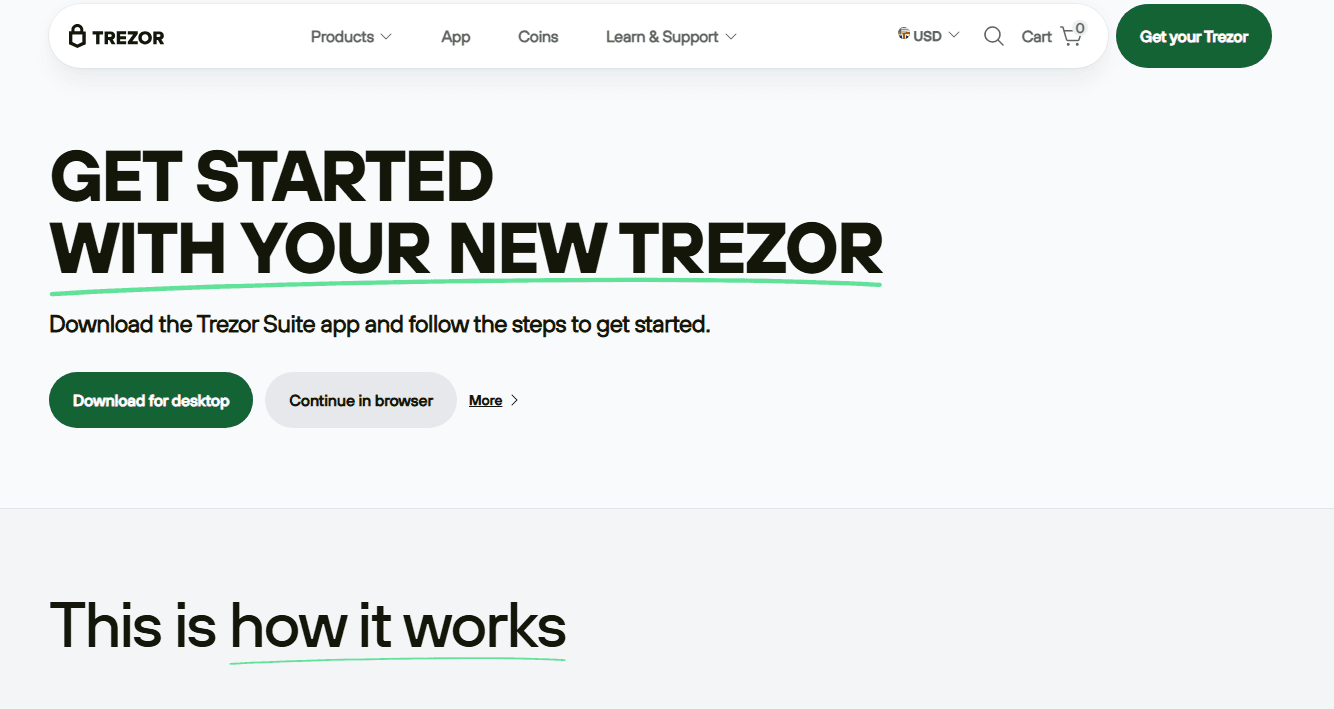
Trezor Suite – A Complete 1200-Word Guide to the Official Trezor Crypto Management Platform
Trezor Suite is the official desktop and web application developed for managing cryptocurrencies with Trezor hardware wallets. It serves as the central control panel where users view balances, send and receive coins, adjust security settings, and monitor portfolio performance. Designed with simplicity and security at its core, Trezor Suite provides a safe environment for interacting with digital assets while keeping the user in full control of private keys.
This detailed guide covers everything you need to know about Trezor Suite—its purpose, features, setup process, security structure, and tips for getting the most out of your hardware wallet.
What Is Trezor Suite?
Trezor Suite is a user interface that connects your computer to your Trezor hardware wallet. It acts as a secure bridge between your device and the blockchain. Unlike traditional wallets or crypto exchanges, Trezor Suite never exposes your private keys or seed phrase to the internet. Instead, all sensitive actions are confirmed directly on the hardware wallet, which keeps your crypto safe from online threats.
The application is designed to be accessible to complete beginners while still offering powerful tools and customization for advanced users. It includes portfolio charts, fee controls, coin management, transaction labeling, privacy tools, and more—all in one organized dashboard.
Why Trezor Suite Is Important
While the hardware wallet stores your private keys securely, Trezor Suite provides everything you need to interact with your assets. Without it, users would lack an easy way to view balances or send transactions. Trezor Suite ensures:
A unified dashboard for managing crypto
A safe way to confirm all actions on your Trezor device
A clear and trustworthy interface that avoids phishing risks
Regular updates for security and new features
The ability to use advanced settings without compromising security
In short, it transforms the hardware wallet into a fully operational crypto management ecosystem.
The Design Philosophy Behind Trezor Suite
Trezor Suite is built around three core principles:
Security first
Every transaction must be approved on the hardware wallet. If a malicious program attempts to alter transaction details, the device shows the correct information, allowing users to reject unauthorized transfers.
Privacy preserved
Sensitive data remains local to the user. Trezor Suite does not automatically store addresses or transaction information on servers. Users have the choice to enable or disable optional analytics, giving full control over data sharing.
Accessibility for all user levels
The layout is clean and organized, making it easy for beginners to navigate while still supporting advanced users with fee adjustments, coin control, and hidden wallet functionality.
Installing and Launching Trezor Suite
When a user sets up their Trezor device for the first time, they are guided to download Trezor Suite onto their desktop. Once installed, the application automatically detects the connected Trezor device and walks the user through initial setup steps like firmware updates and creating a PIN.
Trezor Suite is primarily available as a desktop app to ensure increased security and resistance to phishing attempts. The desktop version allows local verification of signatures, secure transmission of data, and offline functionality for certain actions.
Understanding the Dashboard
Once the device is connected and authenticated, users reach the main dashboard. This is the heart of Trezor Suite and provides an overview of:
Total crypto portfolio value
Individual coin balances
Market movement snapshots
Recent transaction history
Quick access to sending or receiving crypto
The dashboard is clean and uncluttered, allowing users to immediately understand their financial position without navigating through complex menus.
Managing Cryptocurrency Accounts
Trezor Suite supports multiple accounts for each cryptocurrency. For example, users can maintain separate Bitcoin accounts for savings, trading, and daily use. Each account has its own receiving addresses and transaction history.
This structure helps users:
Organize funds more efficiently
Simplify budget tracking
Increase privacy
Separate long-term storage from active holdings
Creating new accounts takes only a moment and does not affect device performance or security.
Sending Cryptocurrency
Trezor Suite offers one of the safest methods for sending crypto. The process looks simple from the user’s side but uses multiple layers of verification to maintain security.
Steps for sending:
Choose the cryptocurrency and account you want to send from.
Enter the recipient’s address or scan a QR code.
Input the amount you want to send.
Set transaction fees (low, normal, high, or custom).
Review transaction details on the computer.
Confirm the transaction physically on your Trezor hardware wallet.
Because the final approval occurs on the device itself, malware cannot manipulate outgoing transactions without detection.
Receiving Cryptocurrency
Receiving crypto is equally secure. Trezor Suite generates a receiving address, and users confirm that the address on the computer matches the address shown on the hardware wallet. This cross-verification prevents address-changing attacks.
Users can generate as many receiving addresses as they need. Old addresses remain valid unless otherwise specified, so your funds are always safe.
Transaction History and Labeling
Trezor Suite keeps a complete, easy-to-read record of your transactions. Each entry shows:
Amount
Timestamp
Address sender/recipient
Fee level
Confirmation status
Account associated with the transfer
One of the useful features is transaction labeling. Users can add notes such as “salary deposit,” “exchange transfer,” or “gift,” which helps with bookkeeping and tax organization.
Portfolio Analytics
Trezor Suite includes built-in portfolio tracking tools that display:
Total portfolio value over time
Performance charts
Asset allocation percentages
Value changes over various timeframes
These analytics help users understand long-term trends and make informed decisions about their holdings.
Security Tools in Trezor Suite
Security is the foundation of Trezor Suite. Key security features include:
PIN Protection
Required every time the device connects to prevent unauthorized physical access.
Passphrase Support
Users can enable a passphrase to create hidden wallets, adding another layer of protection.
Firmware Management
Trezor Suite alerts users when new firmware is available and guides them through safe updates.
Local Storage of Sensitive Data
Wallet information stays on your device, not on external servers.
Trusted Signing Environment
Every action involving private keys requires approval on the hardware wallet.
Privacy Tools
Trezor Suite provides several tools that enhance user privacy:
The ability to disable analytics completely
Options for connecting through privacy-focused networks (if the user chooses)
Avoiding automatic address reuse
Local transaction signing
Users remain in full control of how much data they share, if any.
Supported Cryptocurrencies
Trezor Suite supports a wide range of cryptocurrencies, including:
Bitcoin
Ethereum and ERC-20 tokens
Litecoin
Cardano
Polkadot
Dogecoin
Bitcoin Cash
Many other major networks
Support varies depending on the Trezor model, but the suite continually evolves to integrate additional assets and networks.
Advanced Tools for Skilled Users
Trezor Suite includes advanced options for users who want more control:
Custom Fees
Set your own network fees for faster or cheaper transactions.
Coin Control
Select specific inputs when making transactions, useful for privacy and fee optimization.
Hidden Wallets
Require a passphrase to access, protecting sensitive funds.
Multiple Device Support
Users can manage more than one Trezor device from the same application.
Labeling Export Options
Helpful for accounting or tax reports.
Tips for Using Trezor Suite Safely
To maintain maximum safety, users should follow these practices:
Always verify addresses on the hardware wallet screen
Never store the recovery seed digitally
Regularly update firmware through Trezor Suite
Avoid unknown browser extensions
Keep your computer free of malware
Use strong passwords for local device access
Store your hardware wallet in a safe place
These simple habits significantly strengthen cryptocurrency security.
Final Thoughts
Trezor Suite creates a secure, intuitive environment for managing cryptocurrency through a hardware wallet. It combines clear design, strong security, privacy-oriented features, and powerful tools—making it suitable for beginners and experts alike. With Trezor Suite, users gain complete control over their digital assets while maintaining the protection of offline private key storage.
Whether you’re organizing a diversified portfolio, monitoring transactions, or storing long-term holdings, Trezor Suite provides the confidence and structure needed to navigate the crypto world safely.